
AI and ML training in Banashankari
The Artificial Intelligence and Machine Learning Training by IPEC Solutions is designed to help learners understand how intelligent systems think, learn, and make data-driven decisions. This AI and ML training in Banashankari focuses on hands-on learning, real-world projects, and industry-relevant tools to ensure you gain practical experience, not just theory. Whether you’re a beginner or a working professional, this course helps you build in-demand AI/ML skills, boost your career opportunities, and become job-ready for high-paying roles in today’s competitive tech industry.
Why AI and ML Courses?
Artificial Intelligence and Machine Learning (AI & ML) are driving the global technology revolution, transforming how businesses operate and grow. Today, nearly 75% of enterprises use AI-powered systems to automate processes, analyze data faster, and deliver better customer experiences. By adopting AI and ML, companies can boost productivity by up to 40% while reducing manual effort and errors. This rapid adoption makes AI and ML training in Banashankari an ideal choice for anyone looking to build a future-proof and high-demand career.
The demand for AI and ML professionals is growing at an impressive rate of 45–50% every year, making it one of the most sought-after career paths today. Unlike traditional IT roles, AI and ML skills are applicable across multiple industries, including healthcare, finance, e-commerce, manufacturing, education, and marketing. Enrolling in AI and ML training in Banashankari helps you gain practical, job-ready skills that employers actively seek. With strong demand, wide industry application, and long-term career growth, AI and ML stand out as one of the smartest career choices in today’s competitive job market.
Course Highlights
Industry-Relevant Curriculum
Hands-On Projects
Expert Mentorship
Flexible Learning
Job Assistance
Certification
Practical Tools
Career Transition Support
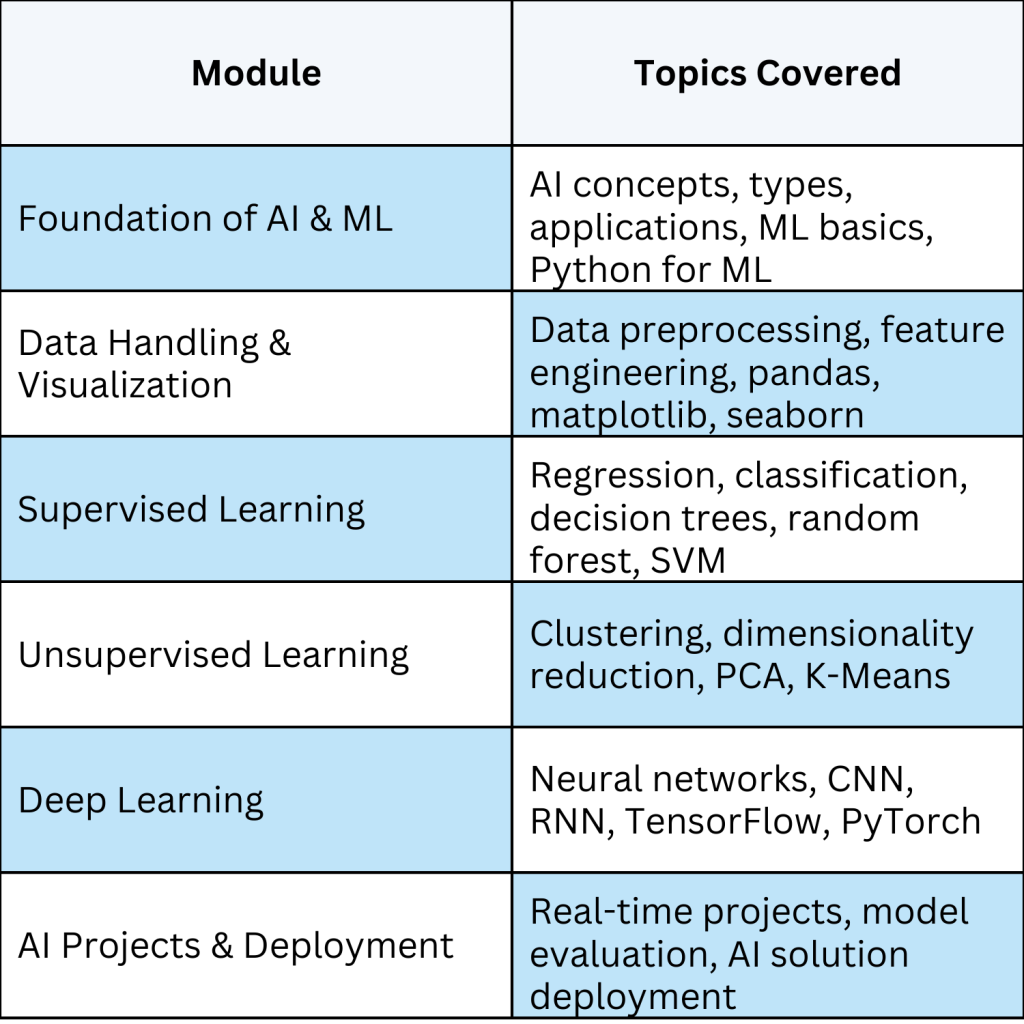
What You Will Learn in This Course
| Course Name | Batch Start Date | Weekday Timing | Weekend Timing |
|---|---|---|---|
| Data Science & AI Accelerator (Data Scientist) | 13/04/2026 | 10 am - 11 am (Mon-Fri) | 10 am - 1 pm (Sat-Sun) |
| AI-ML with Python (Intelligent Automation Engineer) | 15/04/2026 | 11 am - 12 pm (Mon-Fri) | 2 pm - 5 pm (Sat-Sun) |
| Excel Xpert (Microsoft Excel Mastery Program) | 11/05/2026 | 2 pm - 3 pm (Mon-Fri) | 2 pm - 5 pm (Sat-Sun) |
| Ai-Powered Data Analytics (Excel, SQL, POWER-BI & AI) | 15/04/2026 | 2 pm - 3 pm (Mon-Fri) | 10 am - 1 pm (Sat-Sun) |
| Data Xcelerator 3.0 (Analytics to Dashboard Mastery) | 10/05/2026 | 3 pm - 4 pm (Mon-Fri) | 10 am - 1 pm (Sat-Sun) |
| Advanced Certified Professional in AI-Data Science | 15/04/2026 | 3 pm - 4 pm (Mon-Fri) | 2 pm - 5 pm (Sat-Sun) |
| Python Developer Program (PyPro -360) | 14/05/2026 | 11 am - 12 pm (Mon-Fri) | 2 pm - 5 pm (Sat-Sun) |
| Gen AI Mastery (GEN AI Mastery for Non-Coders) | 12/05/2026 | 2 pm - 3 pm (Mon-Fri) | 10 am - 1 pm (Sat-Sun) |
| Business Data Analytics | 15/05/2026 | 3 pm - 4 pm (Mon-Fri) | 2 pm - 5 pm (Sat-Sun) |
| AI in Medical | 11/05/2026 | 10 am - 11 am (Mon-Fri) | 10 am - 1 pm (Sat-Sun) |
| DevOps, AWS, Linux, Networking (4 in 1) | 15/04/2026 | 10 am - 11 am (Mon-Fri) | 10 am - 1 pm (Sat-Sun) |
| Financial Data Analyst | 12/06/2026 | 11 am - 12 pm (Mon-Fri) | 2 pm - 5 pm (Sat-Sun) |
| Retail Data Analyst | 10/06/2026 | 2 pm - 3 pm (Mon-Fri) | 10 am - 1 pm (Sat-Sun) |
| Stock Market Data Analyst | 14/06/2026 | 3 pm - 4 pm (Mon-Fri) | 2 pm - 5 pm (Sat-Sun) |
| Healthcare Data Analyst | 13/06/2026 | 2 pm - 3 pm (Mon-Fri) | 10 am - 1 pm (Sat-Sun) |
| Python Mastery: Beginner to Expert | 12/04/2026 | 10 am - 11 am (Mon-Fri) | 10 am - 1 pm (Sat-Sun) |
| C Developer | 10/07/2026 | 11 am - 12 pm (Mon-Fri) | 2 pm - 5 pm (Sat-Sun) |
| Data Structures Using JAVA | 15/05/2026 | 11 am - 12 pm (Mon-Fri) | 10 am - 1 pm (Sat-Sun) |
| Advanced JAVA | 13/05/2026 | 2 pm - 3 pm (Mon-Fri) | 2 pm - 5 pm (Sat-Sun) |
| C++ Developer | 11/07/2026 | 10 am - 11 am (Mon-Fri) | 10 am - 1 pm (Sat-Sun) |
| C++ with Data Structures | 14/07/2026 | 2 pm - 3 pm (Mon-Fri) | 2 pm - 5 pm (Sat-Sun) |
| Core JAVA | 15/05/2026 | 10 am - 11 am (Mon-Fri) | 2 pm - 5 pm (Sat-Sun) |
| Python Advanced | 13/04/2026 | 2 pm - 3 pm (Mon-Fri) | 10 am - 1 pm (Sat-Sun) |
| Data Analytics with Python | 12/05/2026 | 11 am - 12 pm (Mon-Fri) | 2 pm - 5 pm (Sat-Sun) |
| JAVA with JDBC | 11/05/2026 | 2 pm - 3 pm (Mon-Fri) | 10 am - 1 pm (Sat-Sun) |
AI & ML Training Syllabus
ARTIFICIAL INTELLIGENCE FOUNDATION
MODULE 1 : ARTIFICIAL INTELLIGENCE OVERVIEW
• Evolution Of Human Intelligence
• What Is Artificial Intelligence?
• History Of Artificial Intelligence
• Why Artificial Intelligence Now?
• Areas Of Artificial Intelligence
• AI Vs Data Science Vs Machine Learning
MODULE 2 : DEEP LEARNING INTRODUCTION
• Deep Neural Network
• Machine Learning vs Deep Learning
• Feature Learning in Deep Networks
• Applications of Deep Learning Networks
MODULE3 : TENSORFLOW FOUNDATION
• TensorFlow Structure and Modules
• Hands-On:ML modeling with TensorFlow
MODULE 4 : COMPUTER VISION INTRODUCTION
• Image Basics
• Convolution Neural Network (CNN)
• Image Classification with CNN
• Hands-On: Cat vs Dogs Classification with CNN Network
MODULE 5 : NATURAL LANGUAGE PROCESSING (NLP)
• NLP Introduction
• Bag of Words Models
• Word Embedding
• Hands-On:BERT Algorithm
MODULE 6 : AI ETHICAL ISSUES AND CONCERNS
• Issues And Concerns Around Ai
• Ai And Ethical Concerns
• Ai And Bias
• Ai:Ethics, Bias, And Trust
PYTHON FOUNDATION
MODULE 1 : PYTHON BASICS
• Introduction of python
• Installation of Python and IDE
• Python Variables
• Python basic data types
• Number & Booleans, strings
• Arithmetic Operators
• Comparison Operators
• Assignment Operators
MODULE 2 : PYTHON CONTROL STATEMENTS
• IF Conditional statement
• IF-ELSE
• NESTED IF
• Python Loops basics
• WHILE Statement
• FOR statements
• BREAK and CONTINUE statements
MODULE 3 : PYTHON DATA STRUCTURES
• Basic data structure in python
• Basics of List
• List: Object, methods
• Tuple: Object, methods
• Sets: Object, methods
• Dictionary: Object, methods
MODULE 4 : PYTHON FUNCTIONS
• Functions basics
• Function Parameter passing
• Lambda functions
• Map, reduce, filter functions
STATISTICS ESSENTIALS
MODULE 1 : OVERVIEW OF STATISTICS
• Introduction to Statistics
• Descriptive And Inferential Statistics
• Basic Terms Of Statistics
• Types Of Data
MODULE 2 : HARNESSING DATA
• Random Sampling
• Sampling With Replacement And Without Replacement
• Cochran’s Minimum Sample Size
• Types of Sampling
• Simple Random Sampling
• Stratified Random Sampling
• Cluster Random Sampling
• Systematic Random Sampling
• Multi stage Sampling
• Sampling Error
• Methods Of Collecting Data
MODULE 3 : EXPLORATORY DATA ANALYSIS
• Exploratory Data Analysis Introduction
• Measures Of Central Tendencies: Mean,Median And Mode
• Measures Of Central Tendencies: Range, Variance And Standard Deviation
• Data Distribution Plot: Histogram
• Normal Distribution & Properties
• Z Value / Standard Value
• Empherical Rule and Outliers
• Central Limit Theorem
• Normality Testing
• Skewness & Kurtosis
• Measures Of Distance: Euclidean, Manhattan And Minkowski Distance
• Covariance & Correlation
MODULE 4 : HYPOTHESIS TESTING
• Hypothesis Testing Introduction
• P- Value, Critical Region
• Types of Hypothesis Testing
• Hypothesis Testing Errors : Type I And Type II
• Two Sample Independent T-test
• Two Sample Relation T-test
• One Way Anova Test
• Application of Hypothesis testing
MACHINE LEARNING ASSOCIATE
MODULE 1: MACHINE LEARNING INTRODUCTION
• What Is ML? ML Vs AI
• Clustering, Classification And Regression
• Supervised Vs Unsupervised
MODULE 2: PYTHON NUMPY PACKAGE
• Introduction to Numpy Package
• Array as Data Structure
• Core Numpy functions
• Matrix Operations, Broadcasting in Arrays
MODULE 3: PYTHON PANDAS PACKAGE
• Introduction to Pandas package
• Series in Pandas
• Data Frame in Pandas
• File Reading in Pandas
• Data munging with Pandas
MODULE 4: VISUALIZATION WITH PYTHON – Matplotlib
• Visualization Packages (Matplotlib)
• Components Of A Plot, Sub-Plots
• Basic Plots: Line, Bar, Pie, Scatter
MODULE 5: PYTHON VISUALIZATION PACKAGE – SEABORN
• Seaborn: Basic Plot
• Advanced Python Data Visualizations
MODULE 6: ML ALGO: LINEAR REGRESSION
• Introduction to Linear Regression
• How it works: Regression and Best Fit Line
• Modeling and Evaluation in Python
MODULE 7: ML ALGO: LOGISTIC REGRESSION
• Introduction to Logistic Regression
• How it works: Classification & Sigmoid Curve
• Modeling and Evaluation in Python
MODULE 8: ML ALGO: K MEANS CLUSTERING
• Understanding Clustering (Unsupervised)
• K Means Algorithm
• How it works : K Means theory
• Modeling in Python
MODULE 9: ML ALGO: KNN
• Introduction to KNN
• How It Works: Nearest Neighbor Concept
• Modeling and Evaluation in Python
MACHINE LEARNING EXPERT
MODULE 1: FEATURE ENGINEERING
• Introduction to Feature Engineering
• Feature Engineering Techniques: Encoding, Scaling, Data Transformation
• Handling Missing values, handling outliers
• Creation of Pipeline
• Use case for feature engineering
MODULE 2: ML ALGO: SUPPORT VECTOR MACHINE (SVM)
• Introduction to SVM
• How It Works: SVM Concept, Kernel Trick
• Modeling and Evaluation of SVM in Python
MODULE 3: PRINCIPAL COMPONENT ANALYSIS (PCA)
• Building Blocks Of PCA
• How it works: Finding Principal Components
• Modeling PCA in Python
MODULE 4: ML ALGO: DECISION TREE
• Introduction to Decision Tree & Random Forest
• How it works
• Modeling and Evaluation in Python
MODULE 5: ENSEMBLE TECHNIQUES – BAGGING
• Introduction to Ensemble technique
• Bagging and How it works
• Modeling and Evaluation in Python
MODULE 6: ML ALGO: NAÏVE BAYES
• Introduction to Naive Bayes
• How it works: Bayes’ Theorem
• Naive Bayes For Text Classification
• Modeling and Evaluation in Python
MODULE 7: GRADIENT BOOSTING, XGBOOST
• Introduction to Boosting and XGBoost
• How it works?
• Modeling and Evaluation of in Python
ADVANCED DATA SCIENCE
MODULE 1: TIME SERIES FORECASTING – ARIMA
• What is Time Series?
• Trend, Seasonality, cyclical and random
• Stationarity of Time Series
• Autoregressive Model (AR)
• Moving Average Model (MA)
• ARIMA Model
• Autocorrelation and AIC
• Time Series Analysis in Python
MODULE 2: SENTIMENT ANALYSIS
• Introduction to Sentiment Analysis
• NLTK Package
• Case study: Sentiment Analysis on Movie Reviews
MODULE 3: REGULAR EXPRESSIONS WITH PYTHON
• Regex Introduction
• Regex codes
• Text extraction with Python Regex
MODULE 4: ML MODEL DEPLOYMENT WITH FLASK
• Introduction to Flask
• URL and App routing
• Flask application – ML Model deployment
MODULE 5: ADVANCED DATA ANALYSIS WITH MS EXCEL
• MS Excel core Functions
• Advanced Functions (VLOOKUP, INDIRECT..)
• Linear Regression with EXCEL
• Data Table
• Goal Seek Analysis
• Pivot Table
• Solving Data Equation with EXCEL
MODULE 6: AWS CLOUD FOR DATA SCIENCE
• Introduction of cloud
• Difference between GCC, Azure,AWS
• AWS Service ( EC2 instance)
MODULE 7: AZURE FOR DATA SCIENCE
• Introduction to AZURE ML studio
• Data Pipeline
• ML modeling with Azure
MODULE 8: INTRODUCTION TO DEEP LEARNING
• Introduction to Artificial Neural Network, Architecture
• Artificial Neural Network in Python
• Introduction to Convolutional Neural Network, Architecture
• Convolutional Neural Network in Python
DATABASE: SQL AND MONGODB
MODULE 1: DATABASE INTRODUCTION
• DATABASE Overview
• Key concepts of database management
• Relational Database Management System
• CRUD operations
MODULE 2: SQL BASICS
• Introduction to Databases
• Introduction to SQL
• SQL Commands
• MY SQL workbench installation
MODULE 3: DATA TYPES AND CONSTRAINTS
• Numeric, Character, date time data type
• Primary key, Foreign key, Not null
• Unique, Check, default, Auto increment
MODULE 4: DATABASES AND TABLES (MySQL)
• Create database
• Delete database
• Show and use databases
• Create table, Rename table
• Delete table, Delete table records
• Create new table from existing data types
• Insert into, Update records
• Alter table
MODULE 5: SQL JOINS
• Inner join
• Outer join
• Left join
• Right join
• Cross join
• Self join
• Windows functions: Over, Partition , Rank
MODULE 6: SQL COMMANDS AND CLAUSES
• Select, Select distinct
• Aliases, Where clause
• Relational operators, Logical
• Between, Order by, In
• Like, Limit, null/not null, group by
• Having, Sub queries
MODULE 7: DOCUMENT DB/NO-SQL DB
• Introduction of Document DB
• Document DB vs SQL DB
• Popular Document DBs
• MongoDB basics
• Data format and Key methods
GIT
MODULE 1: GIT INTRODUCTION
• Purpose of Version Control
• Popular Version control tools
• Git Distribution Version Control
• Terminologies
• Git Workflow
• Git Architecture
MODULE 2: GIT REPOSITORY and GitHub
• Git Repo Introduction
• Create New Repo with Init command
• Git Essentials: Copy & User Setup
• Mastering Git and GitHub
MODULE 3: COMMITS, PULL, FETCH AND PUSH
• Code commits
• Pull, Fetch and conflicts resolution
• Pushing to Remote Repo
MODULE 4: TAGGING, BRANCHING AND MERGING
• Organize code with branches
• Checkout branch
• Merge branches
• Editing Commits
• Commit command Amend flag
• Git reset and revert
MODULE 5: GIT WITH GITHUB AND BITBUCKET
• Creating GitHub Account
• Local and Remote Repo
• Collaborating with other developers
BIG DATA FOUNDATION
MODULE 1: BIG DATA INTRODUCTION
- Big Data Overview
- Five Vs of Big Data
- What is Big Data and Hadoop
- Introduction to Hadoop
- Components of Hadoop Ecosystem
- Big Data Analytics Introduction
MODULE 2: HDFS AND MAP REDUCE
- HDFS – Big Data Storage
- Distributed Processing with Map Reduce
- Mapping and reducing stages concepts
- Key Terms: Output Format, Partitioners, Combiners, Shuffle, and Sort
MODULE 3: PYSPARK FOUNDATION
- PySpark Introduction
- Spark Configuration
- Resilient distributed datasets (RDD)
- Working with RDDs in PySpark
- Aggregating Data with Pair RDDs
MODULE 4: SPARK SQL and HADOOP HIVE
- Introducing Spark SQL
- Spark SQL vs Hadoop Hive
BI ANALYST
MODULE 1: TABLEAU FUNDAMENTALS
• Introduction to Business Intelligence & Introduction to Tableau
• Interface Tour, Data visualization: Pie chart, Column chart, Bar chart.
• Bar chart, Tree Map, Line Chart
• Area chart, Combination Charts, Map
• Dashboards creation, Quick Filters
• Create Table Calculations
• Create Calculated Fields
• Create Custom Hierarchies
MODULE 2: POWER-BI BASICS
• Power BI Introduction
• Basics Visualizations
• Dashboard Creation
• Basic Data Cleaning
• Basic DAX FUNCTION
MODULE 3 : DATA TRANSFORMATION TECHNIQUES
• Exploring Query Editor
• Data Cleansing and Manipulation:
• Creating Our Initial Project File
• Connecting to Our Data Source
• Editing Rows
• Changing Data Types
• Replacing Values
MODULE 4 : CONNECTING TO VARIOUS DATA SOURCES
• Connecting to a CSV File
• Connecting to a Webpage
• Extracting Characters
• Splitting and Merging Columns
• Creating Conditional Columns
• Creating Columns from Examples
• Create Data Model
ARTIFICIAL INTELLIGENCE(AI) EXPERT
MODULE 1: NEURAL NETWORKS
• Structure of neural networks
• Neural network – core concepts(Weight initialization)
• Neural network – core concepts(Optimizer)
• Neural network – core concepts(Need of activation)
• Neural network – core concepts(MSE & RMSE)
• Feed forward algorithm
• Backpropagation
MODULE 2: IMPLEMENTING DEEP NEURAL NETWORKS
• Introduction to neural networks with tf2.X
• Simple deep learning model in Keras (tf2.X)
• Building neural network model in TF2.0 for MNIST dataset
MODULE 3: DEEP COMPUTER VISION – IMAGE RECOGNITION
• Convolutional neural networks (CNNs)
• CNNs with Keras-part1
• CNNs with Keras-part2
• Transfer learning in CNN
• Flowers dataset with tf2.X(part-1)
• Flowers dataset with tf2.X(part-2)
• Examining x-ray with CNN model
MODULE 4 : DEEP COMPUTER VISION – OBJECT DETECTION
• What is Object detection
• Methods of Object Detections
• Metrics of Object detection
• Bounding Box regression
• labelimg
• RCNN
• Fast RCNN
• Faster RCNN
• SSD
• YOLO Implementation
• Object detection using cv2
MODULE 5: RECURRENT NEURAL NETWORK
• RNN introduction
• Sequences with RNNs
• Long short-term memory networks(part 1)
• Long short-term memory networks(part 2)
• Bi-directional RNN and LSTM
• Examples of RNN applications
MODULE 6: NATURAL LANGUAGE PROCESSING (NLP)
• Introduction to Natural language processing
• Working with Text file
• Working with pdf file
• Introduction to regex
• Regex part 1
• Regex part 2
• Word Embedding
• RNN model creation
• Transformers and BERT
• Introduction to GPT (Generative Pre-trained Transformer)
• State of art NLP and projects
MODULE 7: PROMPT ENGINEERING
• Introduction to Prompt Engineering
• Understanding the Role of Prompts in AI Systems
• Design Principles for Effective Prompts
• Techniques for Generating and Optimizing Prompts
• Applications of Prompt Engineering in Natural Language Processing
MODULE 8: REINFORCEMENT LEARNING
• Markov decision process
• Fundamental equations in RL
• Model-based method
• Dynamic programming model free methods
MODULE 9: DEEP REINFORCEMENT LEARNING
• Architectures of deep Q learning
• Deep Q learning
• Reinforcement Learning Projects with OpenAI Gym
MODULE 10: Gen AI
• Gan introduction, Core Concepts, and Applications
• Core concepts of GAN
• GAN applications
• Building GAN model with TensorFlow 2.X
• Introduction to GPT (Generative Pre-trained Transformer)
• Building a Question answer bot with the models on Hugging Face
MODULE 11: Gen AI
• Introduction to Autoencoder
• Basic Structure and Components of Autoencoders
• Types of Autoencoders: Vanilla, Denoising, Variational, Sparse, and Convolutional Autoencoders
• Training Autoencoders: Loss Functions, Optimization Techniques
• Applications of Autoencoders: Dimensionality Reduction, Anomaly Detection, Image
Our Certification
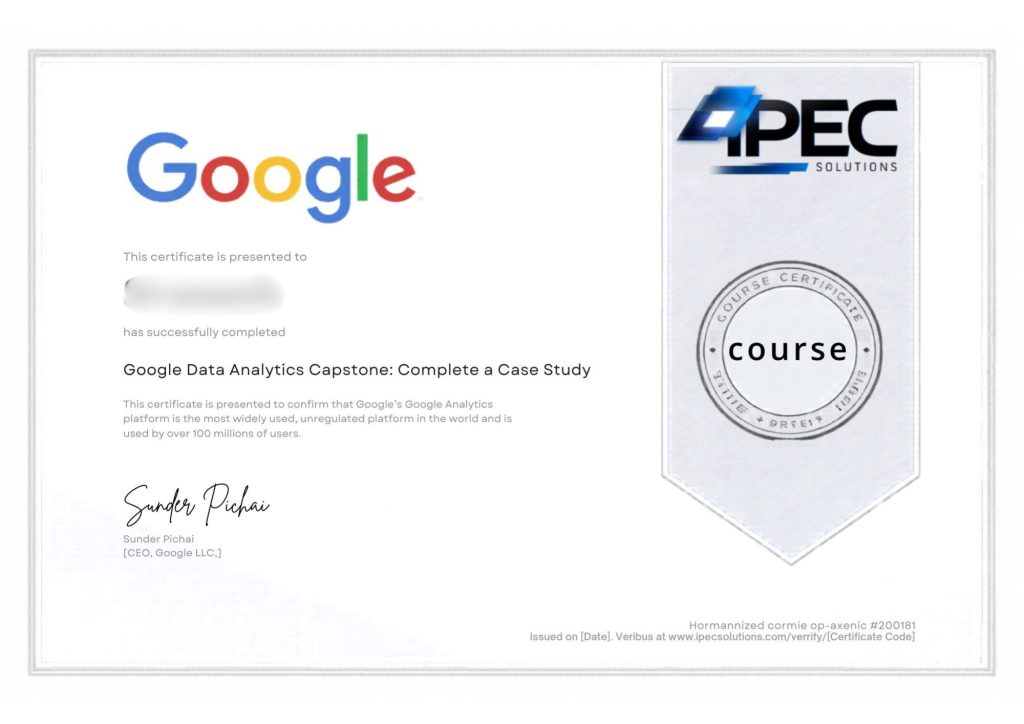
google certification
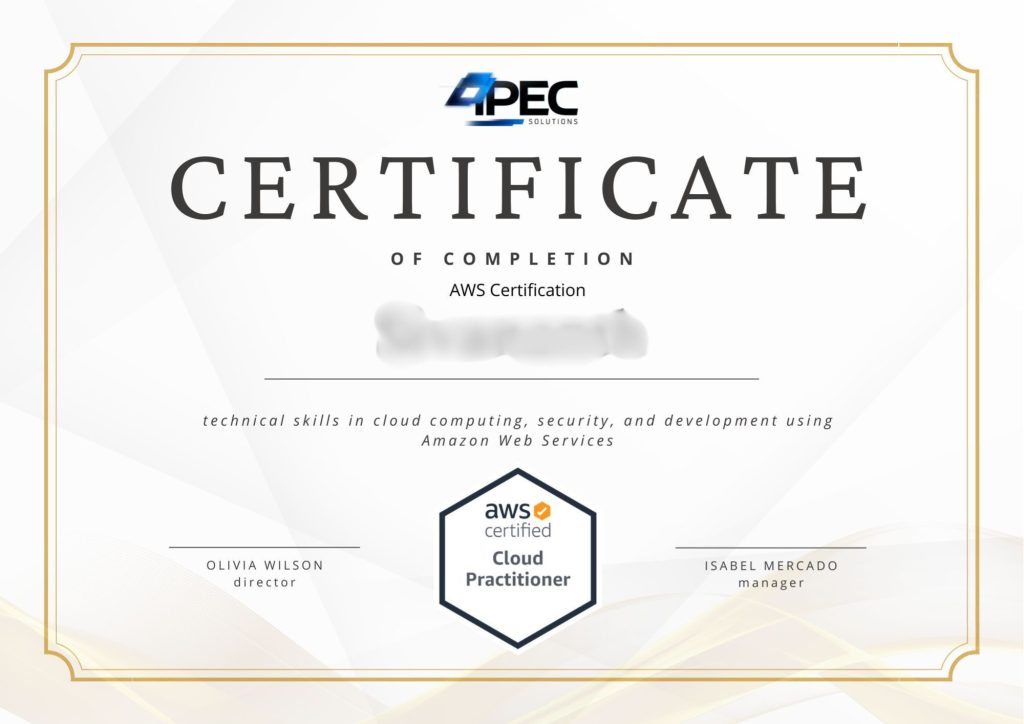
AWS certification

Microsoft certification
High-Impact Certifications That Strengthen AI and ML Courses Job Opportunities
- Microsoft Certified: Azure AI Engineer Associate
- Google Professional Machine Learning Engineer
- AWS Certified Machine Learning – Specialty
- Certified Data Scientist by SAS / IBM
- TensorFlow Developer Certificate
- Professional AI & ML Certifications from IPEC Solutions
Become an expert in your field with our Offline/ online courses.
Unlock your full potential with our expert-led offline and online courses. AI and ML training in Banashankari helps you gain practical knowledge, hands-on skills, and industry-ready expertise to advance your career in your chosen field.
What Our Students Say
Student Experiences: In Their Own Words
Hear from our successful students who have transformed their careers with iPEC’s hands-on training. From mastering AI and automation to securing top industry roles, our graduates share how iPEC’s expert mentorship, real-world projects, and career-focused learning helped them achieve their dreams.